What happens when a brontosaurus merges with a pterodactyl?
The result is still a dinosaur that will be extinct in a few years.
That’s right I said it: extinct. These aging parent companies and their ad agency and PR firm children will continue to be less and less relevant until they fade into history.
The PR industry bloggers of the world are giddy about this merger of two companies who have never cared about those bloggers. The mainstream press who need the new POG’s ad dollars to remain on life support have written constantly over the past 48 hours about “what this means” for the future of advertising and PR.
I think it’s safe for me to say these things on a blog or Facebook as no one at Publicis or Omnicom knows social media exists yet. If they did, they may have had a different merger strategy.
Stan Phelps is a master marketer, author, and soon-to-be-reality TV star. You may recall his awesome book of crowd-sourced research on customer relationship-building and Lagniappe called The Purple Goldfish. Stan’s latest Goldfish is the color of most associated environmental concerns, Hal Jordan, New Orleans, and not coincidentally, profits.
What’s Your Green Goldfish drops this Friday, and Stan was kind enough to share with us a Slideshare presentation of some of the best parts. Please take a look here and share with us your thoughts via comments!
FranCamp– the Social Media conference for The Franchising Industry – is happening May 14 and 15 at the Loews Atlanta Hotel. I am pleased to once again be part of the team organizing FranCamp, this time with theIFA!
If you haven’t yet registered for FranCamp, do so today as space is limited. And now, the numbers…
Number of days: 2
Speakers / sessions scheduled: 20
Education Credits you will toward your CFE accreditation: 300
Number of times in the next two monthsPaul Segretoand I will make a joke that begins: “This one time, at FranCamp…”: 7
Cost: $395
Contacts you will make while networking: up to you!
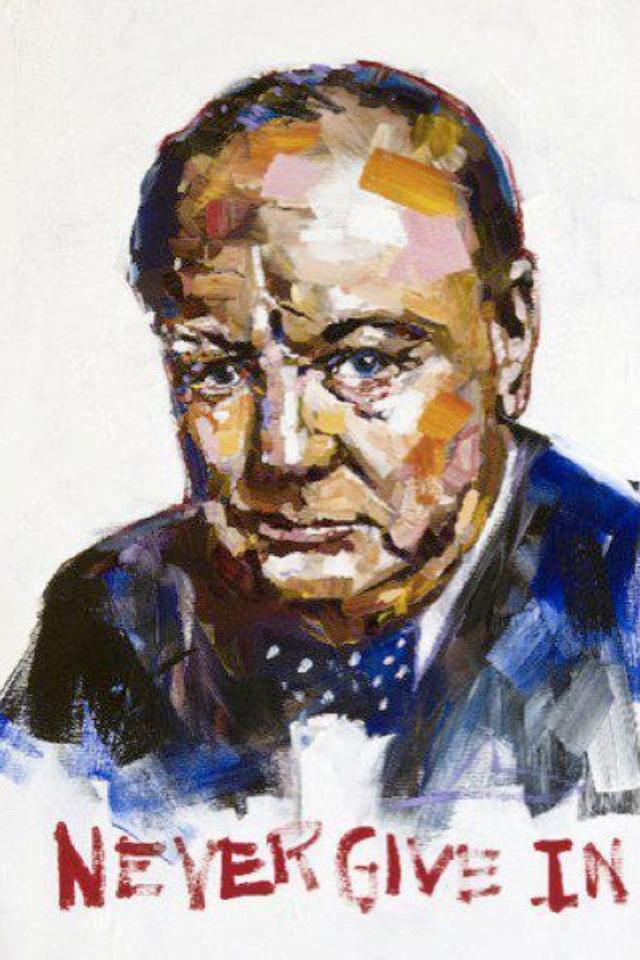
Social Media marketers and community managers are channeling their inner Churchill.
At the onset of World War II, Winston Churchill needed more hours in the day. Sound familiar?
Being the leader of the free world at the time, Churchill was able to do the impossible and doubled the number of hours in his day.
Each day at around 4pm, he left the office, went home, and went to sleep. Around 7pm he woke up, went back to the office and worked with this war staff until about 4am. Then he’d go sleep until 7am, and start the day all over again! In essence, he did create two working days out of one!
And that’s exactly what many of those managing social media for their organizations are doing. And, without the nap! So many of my colleagues are standing down around dinner time, doing their own thing in the evening, and then jumping back in work mode around 11pm or so.
Do you fit this model? Are you jumping back in late in the evening after your time with IRL friends, family, kids, etc? I would love to hear your take on this.
The International Franchise Association’s annual convention returns to Las Vegas in February 16 – 20. As you get ready for the show, here’s a list of gear you’ll want to remember.
What to bring:
1. Business cards. Yes, we still use those. No one really wants to tap phones to exchange contact information because that’s just weird.
2. Hand sanitizer. You really don’t want this flu bug that’s taking people out of work for a week at a time. It’s killing our economy faster than Obamacare, which is ironic.
Stop by the Engage121 booth in the exhibit hall. We’ll have plenty to share. In fact, let’s all bathe in the stuff.
3. A pen. Because, no, I don’t have an extra pen. You would probably just get flu germs on it.
4. Your power cords. A colleague of mine forgot his and headed off to find the Apple Store in Las Vegas during the 2011 IFA. We’re still waiting for him to return.
5. All of the cash you plan on using. Nothing good happens after going to an ATM in a Las Vegas casino.
It’s just media … messages … communications. We’re putting too much emphasis on “how social” something is. It’s losing its meaning quickly. Also, the faster we can stop saying “viral video” when describing every video online, the better!
2. 2013 is the year of Google+.
Sure, some say Google+ is the perpetual also-ran to Facebook.
Will you use it as much in your personal life as you use Facebook? No.
But, when potential customers search for information, will they see the content you put on your Facebook Fan Page or the content you put on your Google+ profile? Yep, it’s called Google+ for a reason. Get on board now!
3. 2013 is the year Public Relations steps up.
After 5 years of complaining that we’re once again not at the executive table, PR professionals will take a leadership role within most organizations to manage the messaging and manage the relationships with the audiences.
4. 2013 is the last year a CEO thinks Social Media is about reaching “the kids”.
Four more years of Obama would be bad for business according to conservative talk show hosts. But Obama’s re-election may help one industry: conservative talk shows.
Why? Over 15 million people tune into Rush Limbaugh each day to hear conversations about how badly Obama is doing. Will 15 million people tune in to hear how well a President Romney is doing? Doubtful.
Rush and many others exploded onto the national scene in the early 1990s when another polarizing figure, Bill Clinton, came into the White House. Little did we know that as polarizing figures go, Clinton was nothing compared to George W. Bush and Barrack Obama!
Conversely, Liberal media’s ratings would improve if the GOP wins. And by Liberal media, I pretty much mean, well, all traditional media except for Fox News, about a dozen syndicated radio shows, and several blogs.
Romney’s victory would surely be a boon for the currently struggling CNN and the always-struggling MSNBC. As ridiculous and far out there that they are, I’ll say one thing for those crazy NBC cable guys: they stand their ideological ground and continue to push the Left’s agenda no matter how few people tune in. But there must be some closet capitalist programming execs at MSNBC who secretly wish against the designs of parent companies NBC and Comcast for an Obama reelection.
Such execs must see the value in having the cable network be the anti-establishment voice. Isn’t it a more natural fit for Liberal voices to play that role and resist “The Man”?
Liberal media played that role during the Bush years but it didn’t result in ratings success: MSNBC and CNN have trailed Fox for many years. But perhaps the Left will really fire up if the election is lost for them.
Left-leaning comedy shows like The Daily Show, The Colbert Report, Saturday Night Live, and The NBC Evening News, have struggled to stay fresh while remaining on-point of not criticizing President Obama. It’s hard to do political satire when you’re supporting the party in power. This has lead to a scouring of America to find obscure Republican state senators and local officials to mock. A Romney win on Election Day would be a shot in the arm for the writers of these shows. Or at least make their jobs easier.
Wow, last night was an exciting presidential debate and I‘m looking forward the continuing discussions – and maybe some arguments – as the season heats up! Locally I am pleased to share with you an event organized by Chicago PR executives David Rudd and Glenn Eden with an all-star line-up of Chicago political leaders.
On October 16 – the day of the next presidential debate – PRSA Chicago teams with Weber Shandwick and The Axis Agency to fire up a discussion with political experts who will offer their perspectives on the changing face of voter opinion.
Our panel includes:
– Laura Washington, Sun-Times columnist and ABC-7 Chicago political analyst
– Ann Liston, Political strategist
– Chris Robling, Principal, Jayne Thompson & Associates
– Alderman Proco Joe Moreno, 1st Ward, Chicago
Moderated by Armando Azarloza, President, The Axis Agency
Topics:
Issues to be discussed and debated include social, political, economic, and cultural trends affecting voters during the 2012 election, including:
– How candidates battle for top-of-mind messages - How social media has changed the topic of discussion for voters – How candidates compete for attention from a diverse population – Variables that have shaped the race for the White House – How voters view the election from an online perspective
When: Tuesday, October 16, 11:30 a.m. – 1:30 p.m. Where: Maggiano’s Little Italy, 516 North Clark Street, Chicago
Event Registration: Member, $37.00/Non-Member, $45.00/Student, $37.00
Thank you Weber Shandwick and The Axis Agency for their organization of the event.
We frequently read about who or what brands are efficiently using social media to engage with customers.
But we rarely see a blog or a conference track looking at who is really bad at social media. Until now. Let’s begin!
Let’s first look at an industry: The Media. To say the traditional media – television, radio, newspaper, and magazine producers – have been slow to adapt to social media is like saying you were resistant to working with the street punks who mugged you. The brightest of media leaders knew that this new means of communication would eat their lunch. And even they were not smart enough to work with social media instead of against it.
Great image from themetapicture.com!
Traditional news outlets remind me of record companies 10 to 15 years ago. At first they mocked the coming of the internet. Then when they saw that it could cut into their business, they fought it. When that didn’t work, they pretended to welcome the internet. Finally they positioned themselves as pioneers.
And the bigger they are, the worse they are at engaging in the digital space. The New York Times “discovered” Twitter sometime around 2010. By 2011, they were pretending to lead the field.
Many broadcasters use social but not to engage with viewers or do anything remotely interesting that would compel us to use their product/brand/service more. Some broadcasters – especially CNN – pretend that they’re social by airing Tweets during the news broadcast. This is poor, lazy journalism. Sure, why send a reporter out to actually, you know, report. Let’s just click one button and show viewers what Ashton Kutcher or a Kardashian has to say about the subject. It’s irrelevant but easy.
And I don’t want to hear the lame excuse that newsrooms are understaffed and budgets have been slashed. Welcome to every company in America in 2012, news guys! Where have you been? Every company and every worker in the US is doing more with less. Our economy is in shambles, not that the media has noticed. In adverse times, winners suck it up, wear many hats, and look to new innovations. But that would require thought and creativity, things that left mainstream media studios long ago.
I pick on CNN because they really are the worst of the worst. Their idea of Social Media is to broadcast – on TV – what others are Tweeting. Thanks CNN, but I will skip your show and just read it myself on my computer or phone. Good thing you’re paying big money to @andersoncooper to read Twitter from those nice studios in Atlanta. No wonder your ratings are at an all-time low and you’re getting creamed by everyone from Fox News to Nick at Nite.
NBC is another clueless social media wonder. I only know this from catching their social media “engagement” during the Olympics. It featured Tamron Hall, who host Mary Carillo introduced regularly as “our social media guru”. Uggggg. And, you guessed it, their idea of a guru is someone who reports on what others are Tweeting. Really? You sent a reporter and a crew to London to do that? Where are the actually conversations with viewers on social channels? Where are the stories, videos, contests, and other things that NBC could have shared?
I see glimpses of hope at the local level. Several local affiliates promote Facebook or Twitter as simply another way for their viewers to get the news. This is still broadcasting, but at least they see social channels not as some new magic like the clueless NBC network people, but as another venue for communications – “Catch us on Channel X, Digital channel X.1, channel1x.com, or @channelXnews on Twitter”… It’s a start, and it’s better than the networks are doing.
I’m looking forward to moderating a panel of the Public Relations industry’s top agency leaders. These top industry executives will address current PR challenges and opportunities in a wide-ranging roundtable discussion. Our leadership forum is one of the most popular PRSA Chicago Chapter events held each year and is back by popular demand!
Issues to be discussed and debated include social, political, economic, and cultural trends affecting the practice of PR in agencies and companies including:
• The Communications role within the marketplace and current economy • Issues that are critical to all in the C-suite, especially in driving economic growth • New insights and innovations that agencies should provide clients • How do forward-thinking agency leaders stay in front of clients’ needs? • Predictions for the rest of 2012 and 2013!








 Social Geek Blog