Social Media Strategy = Snake Oil


Snake Oil

Go search Twitter right now for the phrase “social media strategy” and see who is trying to sell you snake oil. It’s not pretty!  A few Tweets every minute pop up by someone using that phrase.

I cringe every time I hear or read the phrase “Social Media Strategy”. It’s still being used frequently by so-called Social Media “Experts”. By the way, that’s a bogus term too, but that’s well-covered ground here and at many other places.
 

There is no such thing as Social Media “Strategy”.
 

You have a business strategy and perhaps a communications strategy and hopefully a communications plan.

Your Social Media tactics are a means to execute those strategies just like any other tactic or activity. Social Media can be a platform, avenue, channel, or tool.  
 
I have had many organizations tell me “We don’t yet have a Social Media strategy.” My reply is usually, “Do you have a telephone strategy?” Of course not; you use a telephone to make the connections and build relationships to achieve your business goals.

It’s the same with Social Media!

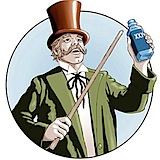
Social Media Douchebag
I hereby pin this badge of dishonor on anyone claiming to be a Social Media Strategist or Expert.

Showhomes Hits Franchise Expansion Goal

Here is a recent DailyVista article regarding Showhomes. The company’s rapid expansion in the current economy is an exciting story that is resonating with media, consumers, and business leaders nationwide.

My firm has worked with Showhomes for a couple of years and I am still fascinated by the company’s story and its ability to tell the story well. Congratulations on another great year!  
 

Showhomes Home Staging 

Showhomes Home Staging Company Hits Franchise Expansion Goal

By Stephanie Jacoby

Managing Editor, DailyVista  

May 11, 2010

Showhomes, a home staging provider, announced it has added 11 franchise units by April of 2010, thus surpassing its expansion goal and setting a company record for new units opened, according to the company.

The Nashville, Tenn.-based company expects that 2010 will be its seventh consecutive year of steady incline. Showhomes is also on track to open 40 new locations this year, even further exceeding its 2010 goal of 25. Showhomes has opened 20 franchises in 2009, compared to the 15 that were projected, and intends to sell out all available units by 2014.

“If you take a step back, we are a home-based business, we are in a hot category of small business, the cash requirements for opening are low, we have an excellent track record, we have some of the best franchisee validation in the industry and we have a really high potential return on investment,” Chief Operating Officer Matt Kelton said in a statement. “When you add it all up, I can’t think of a better franchise in today’s market.”

Showhomes is a home staging franchise that uses live-in home stagers to help realtors sell vacant houses. These live-in home stagers help manage vacant houses while they are on the market for sale and offset a home owner’s expense to stage the home.

Thomas Scott, vice president of marketing, told DailyVista that Showhomes has been around since 1986, but has really seen a boom in its business due to the heightened interest in the art of staging a home for sale.

“HGTV started airing home staging shows, and thanks to them, home staging became a buzz word,” he said. “Staging preps houses for sales – they show better, and that started our momentum. During the current housing bust, when everyone is talking about how bad the market is, we’re one of the few good stories out there in real estate. It’s been golden for us to expand.”

The depressed real estate market has been very helpful for Showhomes, and as such, the company has plans to build out a national foot print, which may include an upwards of 150 to 200 new units.

“We’re well on track to do that, we’re ahead of where we thought we’d be, so it’s a good problem to have,” Scott said. “We’re expanding heavily in the Northeast, and adding more units in Florida, Texas and California. We’re expanding wherever there’s interest.”

Showhomes is big in Southern California, and is hoping to open in Napa Valley and in Sacramento in the coming months. Kelton says that the franchise does well in many markets, small and large, because there are vacant houses everywhere, and even in the boom, it has a lot to do with how often people move. Most consumers will purchase new homes before they sell their old homes and move all their furniture to the new place, which creates a need for vacant home staging.

“Franchising in general has been struggling. It’s one of the real ironies in the market, because in a recession more people want to start their own business more than normal because they’re out of work so there is a big disconnect between franchise companies and people who want to open a franchise,” Scott said. “With our forward-thinking approach, we engage customers and put information out there. Aggressive Blogging, social media and social media PR have really generated sales for us.”

Coupled with Web content, guest blogging and other types of non-traditional communications, Showhomes’ current online content and social media efforts have allowed folks who are naturally interested in real estate or home staging to tune into the company story long before they talk to a salesperson. When they do inquire about either owning their own Showhomes franchise, or requesting the company’s services, they have already done some research and are engaged.

“We’ve also found on the franchise sales side, one thing that’s working today is old-school trade shows,” Scott said. “The entire last decade companies spent getting connected to the Internet, and now with all those portals, people don’t trust sales people.”

Scott says his company saw a big turnaround at trade shows in 2009 and that they now produce almost a third of its overall sales. Consumers want to meet a live person and those that have an inherent interest in the industry go to Showhomes’ booth and meet their team.

“We are also big on what I’d say is social media PR,” Scott said. “We’ve found we have to be way more aggressive and more targeted with the PR we do – it drives a lot of the brand. PR works for us but only because we produce releases that tell real stories and don’t read like what a PR firm produces. We turn our releases into real stories that will get a journalist’s attention.”

“There’s no such thing as viral content in today’s market, it’s just good content,” he said. “We tend to produce things in-house because we find most PR and marketing firms don’t know how to produce good content. I’m a former journalist and I use journalists to do our writing. We know how to produce a campaign the gets results because we all have a very keen idea of what’s interesting and what’s absolute junk. The junk gets tuned out – the really interesting content is what you need to fuel a successful social media campaign.”

Showhomes finds that consumers in today’s market are using Google as a starting point for any kind of research. In line with this research, Scott spends a great deal of time tracking back to see where customers have found a link to the Showhomes Web site, and also implements quite a bit of search engine optimization to stay top of mind when it comes to home staging.

“We do lots of hyper-local searches – generating leads from Google searches and from Craig’s List,” he said. “We had to adapt our marketing in the last year, because social media has really changed the way customer make buying decisions. We’ve had to revamp almost everything we do and it’s been great for our franchisees. We’ve come up with more cost-effective campaigns, but it takes lots of brain power and going against the conventional wisdom.”

As far as potential franchisees, mortgage brokers are Showhomes’ target market at this point, which gives the company an opportunity to grow in the mortgage broker industry, which is struggling these days. Other interested parties are folks that are simply interested in real estate, not necessarily realtors themselves, just those intrigued by the industry.

Scott said that through his own consulting company; a lot of these marketing efforts are handled in-house, adding that due to his journalism background, he hires former journalists and writers to assist with press releases and other content as soon as he needs them. “What has emerged is that getting results is all about the content; you produce intelligent content, designed specifically for that audience, and that’s what fuels social media, instead of a PR agency or a marketing, or an SEO or a Web firm, you have a content strategy firm that produces PR, social media content, blogging content and all the other various pieces that go with it.”

Scott said that those who can tell the company’s story are the ones that truly generate traffic. Outside of franchising, these types of agencies are building content and are quickly becoming a mainstay in the communications industry.


For more information on Showhomes, please contact:
Thomas Scott
615-483-4923
tscott@showhomes.com
@ShowhomesThomas

The Mainstream Media: What Flood in Nashville? Where’s Nashville?

 
After attending a business conference and speaking engagement in Nashville, I luckily got out of town on Saturday, May 1, just as the storms and flooding started.
 
The next morning, I was shocked to see how little attention the TV networks and cable channels as well as newspapers were paying to this disaster!
 
Here are search results of traditional media from Saturday May 1 through Monday May 3 courtesy of MediaQ, an application that monitors and measures both Traditional Media and Social Media:
 
Story                        Traditional Media Hits   
 
Oil Spill in Gulf             19,208 
 
Times Square Bomb    11,808
 
Nashville Floods           5,762

 
Why did Traditional Media pay so little attention to this story? The oil spill story had been around for several days without any real new developments. No one (thankfully!) was hurt in the failed Times Square bombing attempt. Yet over a dozen had already lost their lives in Tennessee and the story was a far third in the eyes of the editors and writers at traditional news outlets.  
 
Newsweek’s Andrew Romano wrote an excellent post explaining the media’s monomaniacal nature and poor judgment call that flooding in Nashville just doesn’t sizzle enough. Here are my additional thoughts.

 
1. The Traditional Media is New York-centric. This is especially true when it comes to anything regarding weather. Does the New York Times even have reporters west of the Hudson anymore?

 
2. The Traditional Media has a faux global concern. The Hollywood crowd won’t be hosting any telethons or concerts for a red heartland state like Tennessee. Fortunately, I’m guessing there’s a very kind-hearted entertainment genre based in Nashville that will take care of that!

 
3. And Romano is right. A natural disaster in the heartland just isn’t dramatic enough for the sensational cable channels, TV networks, and national papers. No villain, no connection to global warming, terrorism, healthcare bills, or Obama.
 
 
Fortunately for those of us who were interested in how people were doing in Nashville, we can bypass the old media and connect via social media. I saw pictures posted from inside the decimated Gaylord hotel and read blog posts from locals updating friends and colleagues on their status.  

Gaylord Opryland Hotel
Inside Gaylord Hotel 5/2/10 - Photo Courtesy of Thomas Scott

Let’s take a look again at MediaQ over May 1 -3, this time looking at Social Media hits:

Story                        Social Media Mentions
 
Oil Spill in Gulf            13,623
 
Times Square Bomb    5,685
 
Nashville Floods          8,597

We can see that the Nashville flood story was a much more important topic of conversation than the newspapers and TV outlets who blew the call would have thought.

For more info on using MediaQ, please contact Jeff Tidyman

5 Tips for PR Pros Using Social Media Tools

Thanks to Stephanie Krol and PRSA Chicago for inviting me to participate in the discussion “Making Communications More Effective with Social Media Tools” along with these all-star panelists: 

MJ Tam, ChicagonistaPRSA Chicago
Rick Wion, McDonald’s
Reid Lappin, VOKAL Interactive
Adam Keats, Weber Shandwick
Gini Dietrich, Arment Dietrich
 
For anyone who couldn’t make it to the event, here are a few of my points regarding social media tools for use specifically by PR professionals:
 

1. As PR practitioners, it is your duty to learn how existing and new tools can help your clients. No more saying “I just don’t have time to keep up!”
 

2. Use and learn new Social Media tools before your clients or executives do. What is an expert? Frequently, it’s someone who just has a jump on the information. 
 

3. As you learn about a new social media platform or tool, sign up and try for a minimum of 30 days. You may find that it has little use for you personally but it may be a useful channel for your brand or clients to engage stakeholders and customers. In any case, 30 days will give you enough of a history to be able to intelligently advise clients about including this new tool in their tool box.
 

4. Take some time to reevaluate your personal usage of Facebook, Twitter, Foursquare, and any other platforms. I’ve spoken with many PR pros who still think they should a) trust privacy settings and 2) not connect with clients or bosses. I find that to be extremely narrow-minded and misses opportunities.
 
If posting personal material that your clients should not see is more important than making a deeper business connection, than perhaps you’re in the wrong business. Stop worrying about privacy settings – which need to be changed on Facebook constantly – and be transparent!
 

5. What’s the Future of Social Media? All of the panelists agree that the future is mobile. I add that the future is mobile and local. Users are flocking to mobile app versions and it’s time for your brand to engage customers at the local level.
 
Think about how PR can deliver results not by just Tweeting about the brand on a global or national level, but also by keeping friends, fans, and customers informed about events happening at each outlet, store, location, or community.

Making Communications More Effective with Social Media Tools *UPDATED 4/23/10*

PRSA Chicago


In Chicago? Near Chicago? Want a good excuse to come to Chicago???
 
Please join us on Tuesday, April 27, when the Chicago Chapter of PRSA presents: “Making Communications More Effective with Social Media Tools.” Register here!
 

I am excited about being a panelist discussing how social media tools can help you engage all audiences along with these fine folks:
 
Adam Keats
@akeats
Senior Vice President, Weber Shandwick
 
Reid Lappin
Partner and founder, VOKAL Interactive
 
Jack Monson
@jackmonson
Vice President, eNR Services
 
MJ Tam
@mjtam
Editor, Chicagonista
 
Rick Wion
@rdublife (personal) and @mcdonalds (McDonald’s)
Director of Social Media, McDonald’s
 
Gini Dietrich (moderator)
@ginidietrich
CEO,  Arment Dietrich, Inc

Top Ten Influencers Covering iPad Apps


iPad Spock
Pitching iPad Apps Would Be Logical
 
Here’s a list of the Top Ten Most Influential Writers Covering iPad Apps: 
 

Christina Warren – Mashable
Yukari Kane – Wall Street Journal
Roman Loyola – MacWorld
Eric Zeman – Information Week
Jay Yarow –  Mashable
Nick Mokey – Digital Trends
Paul Krill – CIO Magazine
Brian X. Chen –  Wired: Gadget Lab
Jared Newman – Network World
Erica Ogg  – CNet News


If you’re doing media relations for an iPad app or just following the developments, this list is a great place to start! These influencers were uncovered using MatchPoint on 3/22/2010.


5 Awesome PR Innovations – PRWeek Awards

PRWeek Awards

The PRWeek Awards winners will be announced tomorrow in New York including PR Innovation of the Year. 
I have been working on the development of MatchPoint for the past year and want to congratulate everyone on the team for the nomination.  

  
All Nominees for PR Innovation of the Year:

Edelman and American Thoracic Society The TB Advocacy Toolkit  

Ketchum The Ketchum Media Optimizer: Adding Discipline to the PR Discipline  

Ketchum Virtual Meeting Mashups – Reinventing Online Events
 
Waggener Edstrom Worldwide What’s on Your Mind? Now Anyone Can Decipher Twitter Discussion with the Help of twendz!  

eNR Services, Inc. and MatchPoint MatchPoint for PR  
 

Best of luck to everyone and I look forward to speaking with you at the Awards!

Index: Top Ten Influencers Writing About SXSW

 SXSW 2010
 
1. Mashable Blog
2. Patrick Caldwell – Austin American-Statesman
3. Fayza Elmostehi – Houston Press
4. Jay Fernandez – Hollywood Reporter
5. Pete Freedman – Dallas Observer
6. Carolyn Kellogg – Los Angeles Times
7. TechCrunch Blog
8. Mekado Murphy – New York Times
9. Deborah Stith – Austin American-Statesman
10. Wired: Beyond The Beyond Blog

 This list was developed using MatchPoint based on writers’ level of influence and relevance of content as of 3/8/10.

5 Bizarre Ways PR Can Kill You Suddenly


(Thanks to guest blogger Thomas Scott for his insights on navigating the dangers of PR)
 

Can PR kill you suddenly? Death by PR
 
Probably not.
 
Can PR be hazardous to the health and well being of your company?
 
Absolutely. It can kill it in one fell swoop. Suddenly.
 

Public Relations practices are changing and the PR industry is in the middle of its most major culture shift in the past fifty years. We’re talking major paradigm shift here; the kind that happened when the iPod changed people’s music buying habits and Domino’s Pizza changed people’s pizza buying habits.

What’s the shift?

Journalists and bloggers, the individuals any successful PR campaign must target, have the lowest trust level of public relations companies, individuals and traditional PR content that they’ve ever had. We spent the entire last decade getting connected and wired to the internet and now we are suffering from overload. People want to have conversations where they trade tips and referrals and in order to have good conversations, you need interesting content.

Here are my 5 ways PR can suddenly kill your business – bizarre because they are counter-intuitive for those of us who have worked in the industry for lengthy amounts of time:

1. Write public relations and news releases in the traditional format. Trust me on this one – journalists have a keen awareness of ‘interesting’ and ‘not interesting.’ Those are the only two categories your content falls into. Period. Tell your story the way a journalist would tell it so it is really a story and not a release. Use traditional journalism methods to hook readers so they chose to know more. Forget to do this and your message will go right in the trash.
 
2. Write poorly thought of headlines. Headlines are called headlines because they serve a very important purpose: you are reading this blog post because I ‘gotcha’ with my headline. Admit it – it’s true! Take the time to write a catchy headline that people will flock to. Search Engine Optimization Experts understand this; it is at the root of the entire link baiting industry. Don’t know what that is? Google it – it applies more to PR than you realize!
 
3. Write content that is meaningless. As a journalist or blogger, I don’t care about your 59 cent taco. I care that your 59 cent taco kept the entire staff of a California farm employed in the down market or how a lowly 59 cent taco can decrease PMS levels in women suffering from a lack of iron (if that is true, please contact me). Be clear on what your story is and avoid stories that are not – well – stories. Journalists are professionally trained to seek out stories. No amount of calling on your part will convince them otherwise!
 
4. Call journalists to follow up. I know this is what real PR firms bill as a valuable service. I also know that as a journalist myself at a major market US daily, calling me to ‘follow up’ was a guaranteed way to get yourself and the company you represent blacklisted. Write better content and tell better, more compelling stories that people would want to talk about. Do that and you won’t have to call.
 
5. Forget about the longevity of a release. Creating content for a PR release is a lot more than sending to journalists. Current thinking among my unscientific group of 4 PR and social media friends is that if a content piece is really good, it is valuable. Keep your content and releases in your bank deposit vault – your company blog – so people can find it long afterwards and click on the link to your website. Every release you write should be on its own webpage, optimized with search engine tools and should have the ability for readers to both click through to your website and share on their social media networks. Forget that and all you’ll get is a whimper, not a bang.

Good luck! 

Thomas Scott

VP Marketing for Showhomes, a nationally franchised home staging company: http://www.showhomesfranchise.com

Thomas is recovering journalist and a new media and content specialist.