Four Things To Do If Social Media Is NOT Increasing Sales

 
I won’t pretend to have some secret formula for Social Media ROI for franchises or any other types of organizations. I’ll leave that to the software companies who have recently popped up and discovered how huge the franchising industry is and want to build your Facebook page…
 

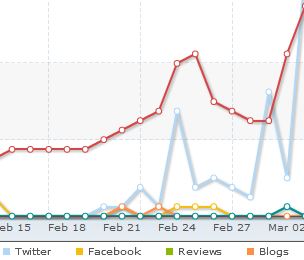
What I will tell you is this: you need to measure Social Media activity against your bottom line.

Is there a correlation? Is SM making an impact on sales, leads, customers, or your other most important metrics?
Social Media ROI
Is Social Media Making an Impact on Your Sales?


If Social Media engagement is increasing your numbers, then keep going!

If not, then you need to do one of these four things: 

1. Increase Social Media activity

2. Change Social Media tactics

3. Improve the content

4. Stop using Social Media

I don’t advocate #4, but it may be the right thing for some organizations. Let’s focus on the other three.

 
1. Increase Social Media Activity

How often are you engaging in conversations with consumers on Twitter, Facebook, LinkedIn and all of the others? How often are you updating your blog(s) with something other than marketing materials and ads? 

Too many organizations rely on the Field of Dreams method of social media places: build it and wait for them to come. Sure there are 600 million users of Facebook, but how many actually run to your fan page once a week?

Best Practice: Post engaging content to your pages three times per week to set a cadence. 


2. Change Social Media Tactics
 
Maybe you’ve been posting to a Facebook Fan Page but getting no conversion of fans to customers. Perhaps your targeted consumers aren’t “living” on Facebook; they may be more apt to engage you on Twitter, a blog, or a LinkedIn group.  You must cover all bases and try all avenues to find your community. 

Best Practice: add a new platform or channel every 60 days for the rest of 2011. And, try setting up individual Fan Pages, profiles, or blog sites for each store, location, or franchisee.


3. Improve the Content

Is there value for others? Or is there value in this content for only you and your organization?

Here’s a good test: Take a quick look right now at the content on your blog(s), Facebook pages, or Twitter account. Is it all press releases, announcements about your company, promotions, and broadcasts about products and how you’re better than the other guys?  Guess who’s going to engage with you over this content? No one (except your co-workers and maybe some current customers who are being kind). 

Best Practice: include marketing content in one out of every ten posts. The other nine will draw consumers into the conversation about the industry, lifestyle, or other information in which they see value.

 

Don’t Be a Social Media Electrician

Social Media Electrician

In previous posts, we’ve discussed the negatives of being a Social Media Hammer Guru. Now I’m asking you to avoid becoming the social media equivalent of an electrician. 

Ever talk to an electrician who’s starting a job or project? What do they talk about the most?

Other electricians.

Specifically, they criticize the previous work done by other electricians who wired or rewired the place. There’s always lots of “that was done wrong”, “I would’ve done this differently,” and of course “that guy doesn’t know what he’s doing!”

The same goes for many trades: computer programmers, sales managers, and NFL coaches. It happens in any job. Maybe I’m giving electricians a bad rap.

Social media marketers and communicators can easily fall into this trap of spending all day pointing out flaws in others’ social plans and tactics. But unlike the electrical trade, there is not yet enough history to establish absolute Rights and Wrongs. As soon as we get close, platforms’ rules change, public sentiment shifts, or research appears showing us that we didn’t really know how few or how many consumers were engaged.

We will do ourselves a favor by not going down the path of the social media electrician or armchair quarterback. Social Media Marketing is still so new (yep, still no “experts”!) that we should relish this time of experimentation and crowd learning.

Why Being On Facebook Is A Mistake

Today’s guest blog post is by Thomas Scott, CEO of Brand Journalists, a firm that is creating breakthroughs for several franchise companies using a mix of content and Engage121.

No Facebook Logo 


..  

Why Being on Facebook is a Mistake

 
Almost every session I attended at this year’s International Franchise Association conference in Las Vegas touched on social media. No matter what the subject matter, the dialogue eventually focused on the impact of social media. Just as in past years, there was standing room only space for social topics and several times the crowd spilled over into the hallways.

Throughout all the conversation, a disturbing trend emerged as a best practice: Facebook is where you should focus your social media efforts. The message to franchisors: when it comes to social media, it is a Facebook world.

On many levels, this makes sense. Facebook is growing at amazing rates and has quickly become the most popular social network. Our customers are all over Facebook and we feel the pressure to be where our customers are. Our franchisees want to be on Facebook and we are struggling to develop a plan makes everyone happy and produces results.

This is a mistake.
I’m not saying that you shouldn’t have a presence on Facebook; at Brand Journalists, we do a ton of Facebook work for franchisors and franchisees, both of which have a large opportunity to connect with customers via the popular network. I believe in Facebook and we are always looking for ways to coax a return out of our marketing.

The mistake is in thinking that all your social media efforts should be focused on Facebook.
Franchisors today need to exploit four areas of social media. They are all important but not all equal. Some are easier to use and some are better for driving sales. In our experience managing social media for several franchise brands and individual franchisees, Facebook is the least likely social activity to drive actual sales and revenue.

Here are the four areas of social media listed in order of importance and impact on your sales:

1. Blogging – every day, millions of people search for billions of things on Google. Despite Facebook’s size, Google is still many multiples larger and growing. Your customers are looking for you and your services on Google; the humble business blog is the best social media tool to help you get your content in front of your target customers. The business blog is the most overlooked social media tool and by far the most underused. Companies that get good returns on social media are heavy bloggers simply because the blog allows creation of optimized content that gets in front of people who want what you have to sell. A good blog leverages emotionally compelling stories and relevant keywords. If content is truly the backbone of a successful social media campaign, it needs a place to call home and its home is your blog.

2.  Google Places – in several IFA sessions we asked if franchisors knew much about Google Places and few understood this important tool. Google Places is Google’s business directory and one of the most important social media platforms. Search for a business or service in your city and you’ll see Google place pages for your local franchisees. This is a mini-website that provides basic information about your business, showcases user reviews and gives business owners spots to update statuses and upload media such as photos and videos. Potential customers who are ready to buy your product or service are influenced more by Google Places than any other social media. If you want to drive sales, spend time claiming, optimizing and managing each of your local franchisee place pages. Spend time to train franchisees on how to manage local pages and gather positive reviews. You’ll get an immediate return.

3.  Social Loyalty Programs – Don’t know what social loyalty is? You are not alone. This is a very new field of social media and it holds immense promise for building repeat business and generating referrals from existing customers. Social loyalty programs tap into point of sale systems. Similar to a grocery store customer card, you issue your customers who register online a swipe card. They indicate which social networks they use and give you their email. Why would someone hand over this information? People respond to incentives. If you are a yogurt shop, they agree to post positive messages about your brand and earn points for every posting. Once they reach a set number of points they get free yogurt. When a loyalty customer swipes the card in the store, the program checks them into foursquare, posts on Facebook and even tweets. Every posting has a coupon or promotion for others so you just turned your customer base into a guerrilla marketing sales force. Not only do you entice customers to visit more often, they build brand loyalty within their networks. Talk about word of mouth on steroids……

4.  Facebook – last but not least, Facebook is not to be overlooked. In this list, however, Facebook is the most difficult way to generate a direct sales return, but that doesn’t mean you should avoid it. Facebook is a closed system. That means your content stays within the Facebook network. Facebook wants it this way to encourage sharing and eventually tap into a lucrative ad market. For businesses, this means creating a business fan page. The best advice I’ve heard is to think of your fan page as a business website with similar functionality as your main company website. Don’t use Facebook as it comes in its default mode. Don’t have people see your wall when they click on your page. Do get help customizing your Facebook tabs and think about ways to serve up blog content, store locators and Facebook-only deals on custom – built tabs.

As franchise companies, social media has become part of our integrated marketing strategies and it’s a good thing: we have tremendous opportunities to build brand awareness and leverage fans. For the first time, companies are really beginning to show solid track records using the social media tools above to drive sales. If you are trying to tackle social media, start at the top of this list and work your way down — you’ll get a much better result and your franchisees will thank you.

If you don’t know where to start, outsource or get help. You won’t be sorry.


Brand Journalists is a content, PR and social media firm based in Nashville, TN that uses Engage121 with all of its clients to help manage content on social networks to create marketing breakthroughs and drive sales.

www.brandjournalists.com
Twitter
@brandjournalist
LinkedIn:
http://www.linkedin.com/in/thomscott 
Facebook: facebook.com/brandjournalists:

Who Should Be Driving Social Media?


Much has been written about the similarities between the Hippie counter-culture of the 1960s and 1970s and the current Social Media culture or subculture. I tend to ignore the love-fest similarities, and focus on one important shared trait: both movements take away the power of mediating institutions.

The most powerful and influential voices of that generation didn’t just work around the system, but also worked with and through the system. The same can be said about Public Relations professionals who should be the thought leaders for Social Media marketing for brands.  

Unfortunately at most organizations, consumer engagement via Social Media is not the responsibility of PR or Communications. And those folks may be the most qualified. Here’s why:

Public Relations = Relate to the Public! 
 

PR has for too long been a misnomer for media relations.  PR should be involved in Social Media, directly engaging consumers without media involvement, as well as working with (and coordinating information for) that particular intermediary.

Are consumers’ questions, reviews, and opinions so different than those of journalists? Not anymore. The same people charged with messaging for the media should be the ones delivering messages to consumers in order to preserve consistency.

PR Pros have the chops

Old-school PR – or even publicity – agents spent much of their time pitching the same handful of journalists year after year. However, the fragmentation of traditional media and the erosion of journalists’ jobs forced PR pros to sharpen their skills when communicating to thousands of individuals of all types.

Social Media is not advertising

Engagement means earning, not buying, attention. Big sales and special deals become more noise for consumers to ignore.  What’s needed is great story-telling, the specialty of a PR pro!

To Friend or not to Friend? What Small Business Owners Should Consider

Welcome Guest Blogger Jillian Gile from Pounding the Pavement with some Facebook advice for small business owners.
 
 Unless you have been living under a rock for the past few years, you know that Facebook is the hottest social media tool for small businesses.  Facebook can be the tool you need to make that personal connection with customers that is so critical.  There are many reasons to use Facebook in your marketing campaigns, but there are also a few pitfalls you should be aware of. 

Pros:

It’s the ultimate word-of-mouth

Facebook is where people go to post what they’re having for dinner, what they think about their favorite TV show, and yes – even where they shop.  Having a Facebook presence means you can be personally involved with getting your name out there.  If one customer “friends” you, all their friends will see your name, even if they don’t actively post about your store. 

Big returns on a small investment

Maintaining and updating a Facebook page does not take up large chunks of time, and Facebook is free, so any return is a huge profit.  You can even sign up to advertise your business on Facebook, and ad packages are affordable for even the tiniest budget – think $5/day or less. 

Facebook – it’s everywhere you want to be

Smart phones are almost ubiquitous – and with these mobile internet connections, Facebook is mobile, too.  Customers running errands may see your well-timed status update and be influenced to stop by your store while they’re out and about. This has happened to me on more than one occasion, when my favorite consignment store posts a photo of a dress or jacket I just have to have, right now.

Become a part of the community

So much time and energy is spent making a business an integral part of a community (think yearbook ads).  Facebook has been accused of replacing face-to-face social interaction, but you can use this substitution to your advantage.  As part of Facebook, your business can gain a prominence that makes people support your business. 

Obviously, Facebook isn’t all sunshine and roses.  We didn’t need the movie The Social Network to show us that Facebook has some disadvantages, too. 

Cons:

There is such a thing as too much exposure

Multiple daily postings about your latest deal, favorite brand, and current giveaway can annoy your Facebook friends and even make them unfriend you.  Try to stick to one post a day (or every other day) and make these announcements count – coupons, funny anecdotes, community announcements. 

Facebook isn’t business friendly

Facebook encourages businesses to create pages and advertise on their site, but they are very strict about protecting their users from fake accounts created solely for a business, and will crack down on anyone who has created multiple accounts for this reason.  Stick to the Facebook page option, and play by the rules. 

You don’t get to 500 million friends without making a few enemies

OK, we’re not suggesting you create an advertising war to get to 500 million friends, but creating a vibrant community of fans on your page will definitely take some time and effort.  Do not stalk your customers or force them to provide you with e-mail addresses so you can boost appearances.  Be patient. 

Facebook isn’t for everyone

I worked at a small town real estate office that tried to use its Facebook fan page to draw in customers with photos of homes and announcing mortgage rates.  The problem is, their fans were all clients who had already purchased homes and weren’t in the market anymore.  They had to revamp their Facebook goals, and become more of a source for community news, which made them a resource for clients and clients’ friends.  When you start your own Facebook page, give some serious thoughts to what your customers need, and what will draw them to your page. 

The point is – is Facebook worth the effort for a small business owner?  My answer is a cautious yes.  Think about what your customers need:  Do they need coupons?  A friendly reminder you’re still around?  A place to find out what’s going on in their town?  Establish what your business needs are, and don’t hesitate to poll likeminded business owners to see what’s worked for them.

Jillian Gile is a guest blogger for Pounding the Pavement and a writer on online career training  for the Guide to Career Education.

Andy Griffith and The 3 Stages of Social Media Engagement

As we begin to wrap up a year of explosive growth in Social Media usage and engagement, I’m seeing many Social Media Marketers moving into new stages of their own involvement. It reminds me of similar changes of audience engagement by one of the all-time great story tellers.
 
I speak, of course, of Andy Griffith’s portrayal of Sheriff Andy Taylor of Mayberry!


Stage 1: Over the top and finding our way

At the start of The Andy Griffith Show, Andy’s depiction was the same as the characters he had been playing on stage and screen and in his popular monologues and comedy records for the previous few years. Andy was over-the-top, absurd, and loud. It’s what Andy knew how to do to get attention and laughs. 
Andy Griffith
Stage 1 Andy: All Laughs


We dig into our own history of past success and use those same tactics when launching our social media engagement. Sometimes it fits, but more often than not, marketers need to tweak their voice and role, leading to…


Stage 2: Getting down to business and finding our role

After the first season or so, Andy realized that it would be best for the show if he played the straight man and let those around him get the laughs. His decision to pay it forward catapulted the show into legendary status.

Andy Griffith
Stage 2 Andy: Paying It Forward

 
The character of Andy as the normal and wise hub for the crazy Mayberry citizens’ shenanigans is a great role model for how Social Media Marketers should carry themselves within their online communities. Be the Andy by helping solve your connections’ business problems, mediating different point of views, and most of all promoting others before yourself.

Note, many so-called Social Media “Experts” or “Gurus” are the equivalent of Deputy Barney Fife. They take credit for others’ heroics, crow about their own expertise, and obsess on the tools of the trade rather than the message. Barneys don’t really make a community worse; in fact, they can be funny. But in the end, we’re just laughing at them. 

 
Stage 3: Getting annoyed by and tired of those around us

It would be best if you as a Social Media Marketer could stay in a perpetual stage two. Toward the end of The Andy Griffith Show’s original run, Andy’s character further developed into a role that you don’t want to be. These episodes are easy to identify as they are in color and “Angry Andy” is constantly irritated by the dimwits around him.
   

Andy and Aunt Bee
Stage 3 Andy: Annoyed
If you feel yourself getting easily agitated by the day to day engagement with the Goobers and Aunt Bees in your online communities, it may be time to stop and to move on to new challenges.


Does PR Own Social Media?

PRSA Chicago 

The Chicago Chapter of PRSA once again wrapped up a year of programs with the city’s agency leaders discussing this year’s trends and next year’s industry forecast. 
 
Northwestern professor Clarke Caywood moderated panelists Bill Zucker, Midwest Director at Ketchum, Maxine Winer, Senior Partner and General Manager at Fleishman-Hillard, Maril MacDonald, CEO of Gagen MacDonald, and Gary Rudnick, EVP and Managing Director at GolinHarris.

 
What are agency leaders asked about first? That’s right…Social Media. The discussion quickly turned to the looming question of WHO owns Social Media:  PR? Marketing? Advertising?


The panel made a good case that PR pros should lead Social Media efforts due to a history of (and skills sets that include) relationship-building, content creation, and garnering attention


Bill Zucker cautioned that no one really “owns” social media, but all disciplines should participate. Gary Rudnick added that owning SM is like the outdated thinking that advertising owns TV and PR owns newspapers. 
 
Maxine Winer sees PR beginning to make a difference when it intersects with customer service. The integration of CRM tools with SM platforms enables companies to engage with their customers faster and more directly. 

It was refreshing to hear Maril MacDonald advise the crowd to align SM engagements to your clients’ or company’s most important business metrics (sales, traffic, etc.) instead of communications metrics. 
 
I agree! Too often, PR conferences are infiltrated by “Social Media measurement mavens” (the most horrible term in the industry) and their silly equations that make CEOs’ eyes glaze over. In order for PR to participate in bottom-line business discussions, we need to speak the language.


While these PR industry leaders make a good case for PR to lead Social Media, I question if that is really happening currently. Many companies with whom I speak daily have Social Media engagement sitting squarely with Marketing with no contribution from the PR team or outside PR agency.


Please share your thoughts via comment section –

Should SM engagement be led by PR, Marketing, Advertising, or Customer Service? And…WHY?


PRSA International Conference 2010

 PRSA International Conference

 
I’m gearing up for the
2010 PRSA International Conference in Washington, DC October 16-19 and I’m quite impressed with PRSA and Verizon for putting together a mobile app for the conference featuring alerts, schedules, hotel info, maps, and sponsor info. Download yours here:
  

Click here to download free PRSA App


And also – here are the top 3 things to bring to this or any conference:

1. Hand sanitizer. Seriously. It should be a universal conference and trade show rule that everyone has to carry a bottle. The only thing I want to bring home is some new ideas.

2. Business cards. Whatever number you were planning to bring, double it.

3. You don’t have your @twitter handle printed on your cards yet? Take 20 minutes this week and write it on the back of a couple of dozen. Because at the show, no, I don’t have a pen!

Christmas Is Not Too Commercial


Heat Miser
Mr Green Christmas, aka Heat Miser


It’s the first week of October and I’m writing a Christmas blog post. Too early? Maybe. But I want to draw out an over-used complaint that
Christmas comes too early and is too commercial.
 

At the same time, I admit to doing a bit of sensational headline-writing to emphasize a point about the need for Christmas to come sooner. Yep! I wanted to use Christmas to draw in some more clicks to this blog. I can’t blame traditional media outlets, TV commercials, and retailers for doing the same thing. This year more than ever, they need a little early holiday spirit from consumers to attract some attention and drive traffic early and often.
 
On a WGN radio call-in show last week, I heard callers complaining that Christmas shopping season is already creeping into their daily lives and how horrible it is to see Christmas items on store shelves already. One woman complained about seeing Christmas items in a retail hobby and craft chain so early. Hmmm…I think the Christmas Sweater-making crowd needs to get rolling on making their projects soon. So if you don’t want to see holiday goods yet, avoid craft stores.
 
Maybe that’s the solution for you if you regularly argue that “Christmas is too commercial”: avoid all commercial outlets. This includes all television, radio, movies, movie trailers, retail stores, restaurants, Facebook, Twitter, all other social media networks, and in fact, the internet altogether. Stay home, stay offline, and read a book set in the summertime, and you won’t have to worry about seeing or hearing about the holidays yet. 
 
But do yourself a favor and accept that Christmas is coming. Fire up some Bing Crosby, get some shopping done early, support your local merchants, and help get this economy rolling. Merry Christmas!

Bing Crosby David Bowie
Too early for Bing and Bowie? Nah!

Social Media Marketing: Chicago, 1893.


White City
The 1893 World's Columbian Exposition in Chicago


Frederick Olmstead
was a brilliant landscape architect responsible for such masterpieces as Central Park in NYC and the grounds at the 1893 World’s Columbian Exposition (aka The Chicago World’s Fair). Here are his thoughts on drawing more attendees to the Word’s Fair in June of 1893:


Frederick Olmstead
Frederick Olmstead


“This is the advertising now most important to be developed; that of high-strung, contagious enthusiasm, growing from actual excellence: the question being not whether people shall be satisfied, but how much they shall be carried away with admiration, and infect others by their unexpected enjoyment of what they found.”

-Frederick Law Olmstead, 1893

 
What Olmstead had done first was LISTEN. According to Erik Larson’s The Devil In The White City, after completing his contributions the fair’s grounds and landscaping, Olmstead was busy working on other projects in New York, North Carolina, and Texas. Across the land, people told him of their apprehension about traveling to Chicago due to the recent downturn in the economy, high cost of travel, and the even higher cost of restaurant meals in Chicago (sound familiar?).


This lead Olmstead to tell his colleagues that the way to turn these attitudes around was via the sharing of fair experiences in Chicago by attendees’ with the folks back home. They focused on improvements “most likely to increase the gleam” in the stories people took home.


Did it work? Yes! After the first few months of disappointing attendance, the second half of the fair season saw record-breaking crowds. Word of mouth had indeed spread from awestruck attendees about the must-see wonders introduced in Chicago such as Tesla’s electricity, moving pictures, neon lights, the massive Ferris Wheel, hamburgers, and Scott Joplin’s music.


The Republic
The Republic - Photo by J. Crocker