A fun resource for finding old media clips is The Museum of Classic Chicago Television. They recently found and uploaded this awesome clip from WFLD-TV Channel. It’s the station-created opening to The Stooges Rascals Hour which ran on the station of many years starting in 1977.
Old images + the perfect music = a nice piece of art that you just would not see on a local broadcast anymore.
If you were to make a list of the biggest rock bands of the 1980s, REO Speedwagon would probably not land on your top 5 guesses.
Or top ten. Or top forty.
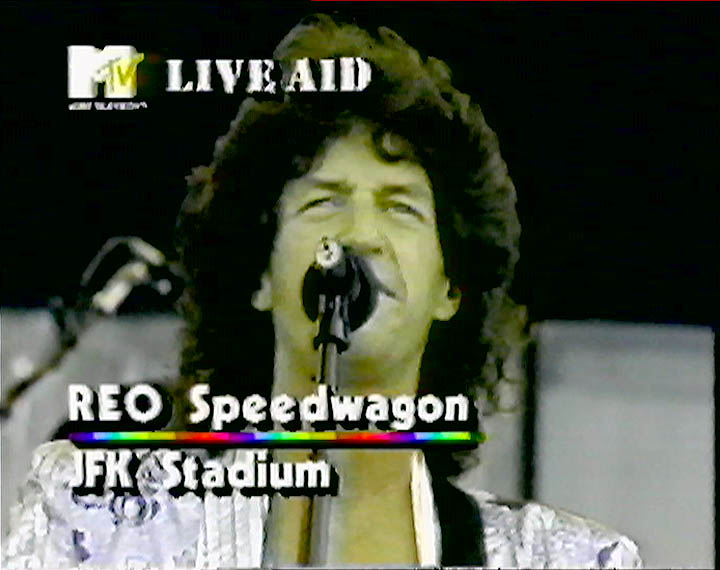
But, if you could take a trip back to 1981 and watch MTV for an hour, you would assume they were the Beatles of the era. We now forget how huge Champaign Illinois’ favorite sons were.
And huge they were! 18 Million albums sold between 1980 and 1984 alone; a dozen top 40 singles in that same period; thousands of live concerts across the globe.
MTV promoted the REO like crazy. REO was a natural fit with MTV’s initial AOR-type programming format. Also important for the new music channel: the band made video clips! In fact, in the first 24 hours of MTV, REO videos (mostly live concert clips) were played 16 times, which ties them with Rod Stewart as the most played artists on the first day. Much of the first week of broadcasts included promotion of MTV’s first Saturday night concert starring, yep – REO Speedwagon.
So even with all of this exposure REO had, we now barely remember them. Why?
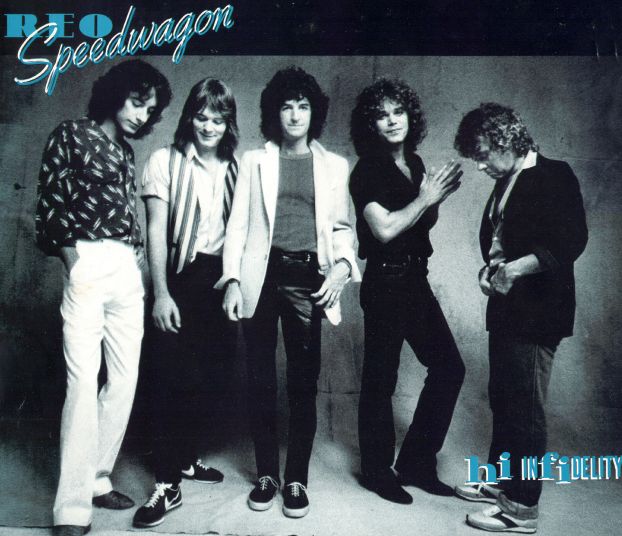
Part of the problem is that they don’t really fit in with the stereotype of what we think bands of the 80s sounded like, and even more so, looked like. These guys had a pretty typical arena-rock / classic rock sound. They had big guitars, but not too crunchy like metal bands. They had keyboards, but basic pianos and organs without the synthesizers of other pop bands or new wavers. And most of all, they didn’t look like 80s pop stars at all. They wore jeans, sport coats, and sneakers – they looked more like stand up comics than rock stars.
Rock Stars or Stand-Up Comics? REO, looking like they’re about to do some airline food jokes.
I have a theory that as time goes on, the masses will forget about mega rock stars who had bigger songs but a pedestrian look. Middle of the road rockers like Genesis, Phil Collins, Bruce Hornsby, Don Henley, and Huey Lewis sold tens of millions of records each, but when someone says “80s Music” most people think of outrageous-looking minor artists like A Flock of Seagulls.
My Grandmother once told me the best year for music is, or was, whatever year you turned fourteen years old. She was not an expert on modern popular music or entertainment media or targeted market research. But she did know a lot about people (especially kids!).
I thought about this theory often while I was working in music promotion and radio programming. It seemed to be true across generations and decades for all demographics.
Recently I shared this notion with my colleague Dave Whalen, who is on my short list of smart dudes. Dave concurred with Grandma’s “Age 14” theory, so I’m pretty much now calling it law: The greatest year for music was whatever year you turned fourteen.
So, for me, the greatest year for music was 1982.
That’s right, 1982: The Crossroads between classic rock, pop, new wave, punk, and heavy metal. But remember, that’s just for me…your experience will vary…
82 Was Madness!
Not About Michael Jackson
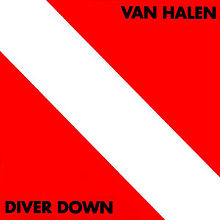
A quick note here – 1982 brought us the best-selling album of all time, Thriller. However, I am not, nor was I ever, a fan. The only part of it in which I find any value is the Eddie Van Halen guitar solo in Beat It (oh, and the Vincent Price voice-over bit in Thriller). But if you really want to catch some great Eddie work from ’82, see the Diver Down album on the list below.
MTV
The video music channel launched in August 1 1981, but it was 1982 where the number of homes in the US (including mine) with access to MTV exploded. And then, everything changed!
The List
The best way to adequately explain how BIG 1982 was to Generation X is to list some of the albums of the year that were huge sellers, influential, or important milestones. See if you agree with me about 1982 and/or the “Age 14” rule…
Peter Gabriel – Security
The Clash – Combat Rock
XTC – English Settlement
The Jam – The Gift
Talking Heads – The Name of the Band Is…
Asia – Asia
Genesis – Three Sides Live
Men At Work – Business As Usual
Frank Zappa – Ship Arriving Too Late To Save the Drowning Witch
Sonic Youth – Sonic Youth
Split Enz – Time and Tide
Squeeze – Sweets From a Stranger
Madness – Complete Madness
INXS – Shabooh Soobah
The Fixx – Shuttered Room
Devo – Oh, No!
Men Without Hats – Rhythm of Youth
Thomas Dolby – Golden Age of Wireless
The Motels – All Four One
Dexys Midnight Runners – Too-Rye-Ay
Flock of Seagulls – Flock of Seagulls
Duran Duran – Rio
Go-Go’s – Vacation
Pat Benatar – Get Nervous
Adam Ant – Friend or Foe
Robert Plant – Pictures at Eleven
Pete Townsend – All The Best Cowboys
The Who – It’s Hard
The Beatles – Reel Music
Toto – IV
John Cougar – American Fool
Tom Petty – Long After Dark
Queen – Hot Space
Kansas – Vinyl Confessions
Rolling Stones – Still Life
Crosby Still & Nash – Daylight Again
Steve Miller – Abracadabra
Golden Earing – Cut
Bruce Springsteen – Nebraska
Phil Collins – Hello, I Must Be Going
Led Zeppelin – Coda
Scorpions – Blackout
Iron Maiden – Number of the Beast
Rainbow – Straight Between the Eyes
Ozzy Osbourne – Speak of the Devil
Sammy Hagar – 3 Lock Box
Van Halen – Diver Down
What great albums are missing on this list? Let me know via comments!
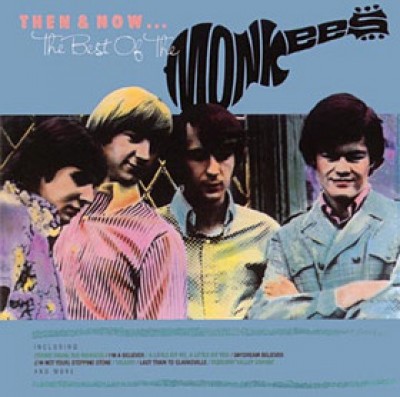
Who ruled the radio airwaves, record charts and most importantly, video music channel programming of 1986? Genesis? Phil Collins? Bon Jovi? Madonna? How about The Monkees!
Somewhere between audio and video in 1986, there was a huge revival of The Monkees. The comeback was as planned, pre-packaged and targeted as the original Monkees show. And, our friends at MTV are to thank!
This wasn’t geared toward the Boomers who first made “The Pre-Fab Four” one of the top ten acts in the 1960’s. This was targeted at the Generation X’ers who grew up watching the Monkees as a syndicated show (always in the summertime here in Chicago!) in the 1970s and early 1980s. It was brilliant programming move. The kitsch of the Monkees, campy visual comedy, and most of all, pre-made music videos (typically 2 per 30 minute episode) were a perfect match for The MTV Generation.
It started with a series of Monkees Marathons in early 1986 on MTV. The show ran and ran and ran that spring.
I saw the commercial for Eric Lefcowitz’s Monkees Tale book so many times that I can recite the PO box number in my sleep 26 years later!
The popularity of these reruns of reruns resulted lots of records and tapes from Rhino’s catalog being sold. This lead to a new greatest hits release with a new song (“That Was Then, This Is Now”), a tour, and a Christmas video (of which is dreadfully hard to a good copy!). Those enterprises included a brief reunion with Mike Nesmith, The Monkee who didn’t really need the money.
Late ‘86 brought a new album of all new material (“Pool It”) which lead to 2 decades of on again / off again reunions, recording and tours. These reunions and comeback seem to now be over with through 2012 and the passing of Davy Jones. Though his death itself lead to a jump in sales of a recent Greatest Hits album on iTunes and Amazon and a third generation of Monkeemania!
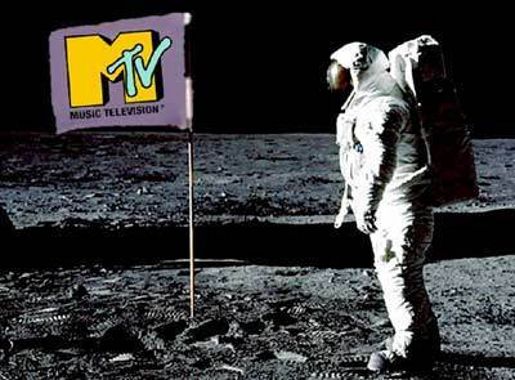
Every August 1, fans of 80s music, Classic Rock, New Wave, etc note that it is the anniversary of MTV launching. Last year, we saw several media stories about the 30th Anniversary and were treated to seeing some 30-year-old content via places like the awesome YouTube Channels MTVClassic1andMTVTheFirst24.
But the real 30th anniversary for most of the US is happening right now. It was the summer of 1982 – not 1981 – when most cable customers got MTV.
On MTV’s Day One, very few cable operators actually offered MTV. I don’t trust anyone who says that they remember watching MTV’s first hour of broadcast. If anyone says this to you, ask them how the liked living in Oklahoma City, as that’s one of the few larger markets that had it on day one!
It was nearly a year later that most of America got the world’s first music channel. I can remember coming home from camp in June of 1982 and seeing “Who Can It Be Now” by Men At Work. The phones in my little town in Northern Illinois were on fire with high school and junior high school students spreading the word about what was going on Warner Amex Cable channel 12!
Note: here is a republished post from November of 2011 I wanted to share as we remember Andy Griffith today.
As we begin to wrap up a year of explosive growth in Social Media usage and engagement, I’m seeing many Social Media Marketers moving into new stages of their own involvement. It reminds me of similar changes of audience engagement by one of the all-time great story tellers. I speak, of course, of Andy Griffith’s portrayal of Sheriff Andy Taylor of Mayberry!
Stage 1: Over the top and finding our way
At the start of The Andy Griffith Show, Andy’s depiction was the same as the characters he had been playing on stage and screen and in his popular monologues and comedy records for the previous few years. Andy was over-the-top, absurd, and loud. It’s what Andy knew how to do to get attention and laughs.
Stage 1 Andy: All Laughs
We dig into our own history of past success and use those same tactics when launching our social media engagement. Sometimes it fits, but more often than not, marketers need to tweak their voice and role, leading to…
Stage 2: Getting down to business and finding our role
After the first season or so, Andy realized that it would be best for the show if he played the straight man and let those around him get the laughs. His decision to pay it forward catapulted the show into legendary status.
Stage 2 Andy: Paying It Forward
The character of Andy as the normal and wise hub for the crazy Mayberry citizens’ shenanigans is a great role model for how Social Media Marketers should carry themselves within their online communities. Be the Andy by helping solve your connections’ business problems, mediating different point of views, and most of all promoting others before yourself.
Note, many so-called Social Media “Experts” or “Gurus” are the equivalent of Deputy Barney Fife. They take credit for others’ heroics, crow about their own expertise, and obsess on the tools of the trade rather than the message. Barneys don’t really make a community worse; in fact, they can be funny. But in the end, we’re just laughing at them.
Stage 3: Getting annoyed by and tired of those around us
It would be best if you as a Social Media Marketer could stay in a perpetual stage two. Toward the end of The Andy Griffith Show’s original run, Andy’s character further developed into a role that you don’t want to be. These episodes are easy to identify as they are in color and “Angry Andy” is constantly irritated by the dimwits around him.
Stage 3 Andy: Annoyed
If you feel yourself getting easily agitated by the day to day engagement with the Goobers and Aunt Bees in your online communities, it may be time to stop and to move on to new challenges.
Holiday reruns already? Not really…I just wanted to republish this post from last year for a quick break from discussing Social Media Marketing and PR this week. Let’s talk tunes!
Here’s my list of the best Christmas songs of the Modern Rock Era, which I’m defining as roughly the mid- 1970s through the early 2000s. You will find no Perry Como, Andy Williams, or Bing Crosby here (wait, we do have some Crosby….see #2…) What are your favorites to add?
“As God as my witness, I thought turkeys could fly.”
Several years ago, I had the privilege of meeting Gordon Jump, aka Arthur “Big Guy” Carlson of WKRP in Cincinnati. He was passing through town on a PR tour for Maytag (he was the Maytag Repairman in the commercial campaign at the time) and did a live studio interview at the radio station I was programming.
What a pro! Mr. Jump was a PR person’s AND a media outlet’s perfect interviewee: he promoted the Maytag event for which he was the guest, and also was open to reminiscing about his WKRP glory days. It was near Thanksgiving, so he gave us his best on-air recreation of his classic quote from the WKRP turkey massacre episode. He was thankful for having such a good run and for still acting and portraying fun characters.
In Heavy Rotation this week on my iPod, phone, CD player, or turntable while writing this blog:
Pearl Jam – Ten
1991
Twenty years ago this week…what!?!?! Twenty years? Yes, on March 27, 1991, Pearl Jam began recording their Epic debut, Ten. While Nirvana’s Nevermind was first, I’ve always preferred PJ’s Ten as a much more complete, and overall better album. Give it a listen again you may find that the layered sounds give an even darker feel than you may have remembered. I guess that’s what 20 years of light hip-hop and shiny happy alternative-so-called-rock has done to our popular music palate.








 Social Geek Blog